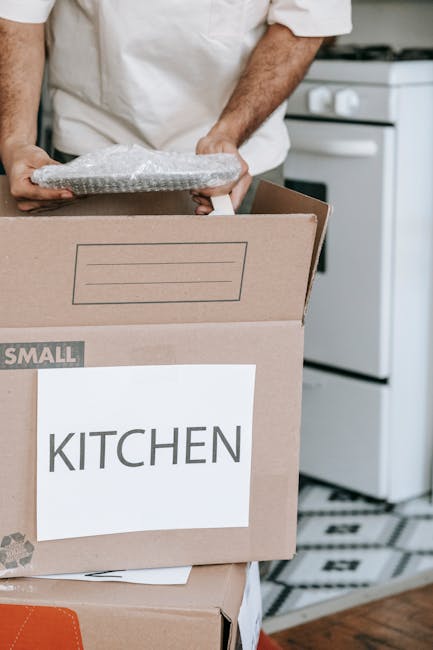
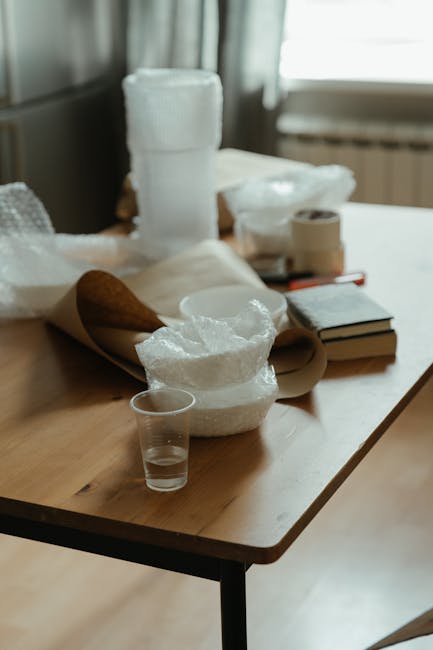
Essential packing checklist for fragile items in long distance removals
Long-distance moves put fragile belongings under more stress than a local trip ever will. Boxes are handled more often, journeys are longer, and a single weak packing choice can turn a carefully planned move into a painful unpacking job. If you are moving glassware, ornaments, framed art, lamps, mirrors, electronics, or inherited items with sentimental value, an Essential packing checklist for fragile items in long distance removals is not a nice-to-have. It is the difference between arriving with confidence and opening boxes with your fingers crossed.
This guide walks you through what to pack, how to pack it, what materials actually help, and where people most often go wrong. You will also find a practical checklist, a comparison table, and a realistic example so you can judge what is worth doing yourself and what may be better left to a professional team. If you need wider moving support, services such as removals in Lee, packing and boxes support, or a carefully timed delivery arranged around your schedule can make a big difference.
Truth be told, fragile items rarely fail because of one huge mistake. They usually fail because of several small ones: the wrong box, too much empty space, weak tape, and no clear labelling. That is all fixable.
Table of Contents
- Why this packing checklist matters
- How the fragile-item packing process works
- Key benefits and practical advantages
- Who this is for and when it makes sense
- Step-by-step guidance
- Expert tips for better results
- Common mistakes to avoid
- Tools, resources and recommendations
- Law, compliance, standards, and best practice
- Options, methods, and comparison table
- Case study or real-world example
- Practical checklist
- Conclusion
- Frequently asked questions
Why Essential packing checklist for fragile items in long distance removals Matters
Fragile items face a very different journey in a long-distance removal. They are not just moving from one room to another. They may be loaded, stacked, turned, driven for hours, unloaded, stored briefly, and handled again. Every extra touch point increases the risk of chips, cracks, pressure damage, or moisture problems.
The real issue is that many fragile items fail quietly. A glass can survive the trip and still break later because the box flexed and created a stress crack. A lamp may look fine until you discover the shade frame is bent. A framed print may arrive with condensation damage because it was packed without proper separation. These are not dramatic disasters, but they are frustrating and expensive all the same.
A good checklist gives you structure. It helps you choose suitable packaging, group items by fragility, control movement inside each box, and label everything clearly enough that handlers know what is inside. That last part matters more than people think. A well-packed box that is then placed on its side under a heavy one can still suffer damage. The best packing system works together with careful handling, which is why many people also look into insurance and safety guidance before a move.
For families, renters, students, businesses, and anyone moving breakables across the country, this kind of preparation saves money and lowers stress. It also makes unpacking much calmer. Nobody wants to discover a box marked "kitchen" contains six loose wine glasses and one very brave mug.
How Essential packing checklist for fragile items in long distance removals Works
The process is straightforward once you break it into stages. First, you decide what is actually fragile and what needs special treatment. Then you collect the right materials, pack each item with enough cushioning, and create a stable box structure that can withstand movement over time. Finally, you label, seal, and load the boxes so they are easy to recognise and less likely to be crushed.
In practice, that means thinking in layers. The item itself needs protection. The box needs internal fill to prevent movement. The outside of the box needs clear markings. And the item's position in the vehicle should reflect how vulnerable it is. A sturdy box alone is not enough if the contents can slide around inside it.
For long-distance removals, the extra detail really pays off. A short move might tolerate a bit of overpacked newspaper or one missing cushion layer. A longer journey usually will not. Temperature changes, stops and starts, and the cumulative effect of vibration all expose weak packing choices. This is especially relevant for glass, ceramics, screens, mirrors, and delicate decorative pieces.
If you are using a service where you package your items and wait for collection, the same principles apply. A professional mover can carry and transport efficiently, but the better your packing, the lower the risk. That is the entire point: good packing does not just protect items, it helps the rest of the move go more smoothly.
Key Benefits and Practical Advantages
A proper fragile-item checklist does more than prevent damage. It improves the whole moving experience in ways that are easy to overlook until you have done a few moves the hard way.
- Lower breakage risk: Items are cushioned, separated, and less likely to knock into each other.
- Faster unpacking: Clear labels and sensible grouping mean you know what to open first.
- Less last-minute panic: When you have the right materials in advance, you are not improvising with old carrier bags and tea towels.
- Better stacking in the van: Correct box sizes and clear markings help create safer loading patterns.
- Reduced hidden damage: Good internal support helps prevent pressure cracks and abrasion during the journey.
- Peace of mind: Sentimental items are easier to trust when they are packed in a methodical way.
There is also a practical financial benefit. Replacing everyday glassware is one thing; replacing a framed print, a specialist lamp, or a piece of equipment with sentimental value is another. A few extra minutes spent packing carefully often saves far more than it costs in materials.
If your move involves a wider house move, it can help to read practical guides such as how to reduce moving stress in a house move and packing more efficiently for a big move. Fragile-item packing works best when it is part of the whole plan, not an isolated task at the end of the week.
Who This Is For and When It Makes Sense
This checklist is useful for almost anyone moving fragile belongings over a meaningful distance, but some people need it more than others.
Home movers
If you are relocating a full household, fragile items often get squeezed into the gaps around furniture, which is exactly where damage tends to happen. Kitchenware, mirrors, picture frames, vases, ornaments, and tableware all need individual consideration.
Students and renters
Smaller moves can be deceptively risky. A student moving across the country may have fewer boxes, but one laptop, a speaker, or a set of glass kitchen items can still be badly packed in a hurry. A service like student removals support in Lee is especially useful when timing and budget matter.
Families with inherited or sentimental items
This is where careful packing becomes non-negotiable. Heirlooms, framed photographs, artwork, and delicate keepsakes often cannot simply be replaced if they are damaged.
Small businesses and office movers
Desks and chairs get most of the attention, but offices often contain monitors, printers, glass partitions, and display items that need more than a standard box and tape. For that reason, some organisations prefer a dedicated office removals approach rather than treating the move as a general load.
Anyone using storage before delivery
If fragile items will sit in storage, even briefly, packaging needs to be cleaner and more stable. Storage introduces another round of handling, and sometimes a longer period of stillness where pressure can build if the box is badly packed. If that describes your move, read up on storage options before deciding how to prepare the goods.
Step-by-Step Guidance
Below is a practical method that works well for most long-distance moves. It is simple enough to follow, but thorough enough to protect the types of items people usually worry about most.
1. Sort fragile items by type and sensitivity
Group items by material and shape. Glassware should not be packed with heavy ceramics. Screens should not be packed with metal accessories. Mirrors and frames need different support from bowls and mugs. Ask yourself: if this box were tipped or dropped slightly, which item would fail first?
2. Gather the right materials before packing starts
Do not begin with only one roll of tape and a handful of old newspapers. You want good-quality double-walled boxes where needed, packing paper, bubble wrap, corner protectors for frames or mirrors, strong tape, labels, and enough filler to remove movement. For more general supplies, the packing and boxes service page is a useful starting point.
3. Wrap each item individually
Each fragile item should have its own protective layer. Use packing paper first for surfaces that may scratch, then bubble wrap where impact protection is needed. For glass or glazed ceramics, wrap handles and protruding parts separately. The point is not to cocoon everything until it becomes unrecognisable; the point is to create even protection without leaving pressure points.
4. Line the bottom of the box
A box should never start empty. Add a cushioning layer at the base so the first impact is absorbed by material rather than by the item itself. Crumpled paper or a suitable filler can work well here, as long as it is dense enough to stay in place.
5. Place heavier fragile items at the bottom and lighter ones on top
"Fragile" does not always mean "light." A ceramic bowl may be both breakable and heavy. Keep the weight balanced, but never force heavy items to bear down on lighter ones. If there is any uncertainty, separate the items into smaller boxes rather than creating one overfilled container.
6. Fill gaps so nothing moves
This is the step many people underestimate. If you shake the sealed box and hear movement, the packing is not finished. Add paper or cushioning until the contents feel stable. Movement inside the box is one of the biggest causes of hidden damage during long journeys.
7. Seal and reinforce the box properly
Use strong tape along the centre seam and, for heavier fragile boxes, reinforce the edges as well. The goal is not to make the box look industrial; it is to stop the seams from opening under pressure or vibration.
8. Label clearly on multiple sides
Mark the box with simple instructions such as "Fragile," "This way up," and a room destination where relevant. A label on one side only is too easy to miss once boxes are stacked. The clearer the markings, the easier it is to handle the box correctly at the other end.
9. Load with care
Even perfect packing can be undermined by poor loading. Keep fragile boxes upright, avoid placing them under heavy furniture, and make sure there is a stable position in the vehicle. For moves involving larger items alongside delicate pieces, it can help to review advice on moving furniture safely so the load is planned more thoughtfully overall.
10. Unpack in the right order
Once you arrive, do not leave fragile boxes buried in a stack while you sort the rest of the house. Unpack the items that need the most care first, especially anything that may have been under light pressure for a long time. A calm, methodical unpacking process is often the final part of successful packing.
Expert Tips for Better Results
Small improvements make a surprisingly large difference in long-distance moves. These are the kinds of details experienced movers tend to care about because they see the results repeatedly.
- Use box size strategically: Smaller boxes are safer for dense fragile items. Bigger is not better if the contents shift.
- Avoid mixing materials with different pressure points: Metal, glass, wood, and ceramic each create different risks.
- Double-box especially delicate items: Valuable ornaments, specialty glass, and screens can benefit from a box inside a box with cushioning between.
- Protect corners and edges first: Many breaks start at a corner, not in the middle of the item.
- Keep liquids out of fragile boxes: Even sealed containers can leak and weaken cardboard during a long drive.
- Label priority items early: If you need a specific item on arrival, mark it clearly rather than assuming you will remember which box it was in.
- Use towels carefully: Soft fabrics can help, but they are not a substitute for structured cushioning because they compress over time.
A useful rule of thumb: if an item would be annoying to replace, pack it as if it matters. Because usually, it does.
If you are moving something unusually delicate, such as a piano or specialist equipment, specialist handling is worth considering. The reasoning behind safe piano moving advice is relevant here too: weight, shape, and fragility need a controlled approach, not guesswork.
Common Mistakes to Avoid
Most packing damage comes from preventable errors. Some are obvious in hindsight, but they are easy to miss while you are rushing to finish the move.
- Using weak or worn boxes: Old supermarket boxes can collapse when stacked or exposed to moisture.
- Overpacking a box: More items in one box means more pressure points and less control.
- Leaving empty space: Void space allows movement, and movement causes breakage.
- Wrapping too loosely: Thin layers that shift during transit are not enough.
- Forgetting to label multiple sides: A single label can be hidden the moment the box is stacked.
- Mixing fragile and non-fragile items carelessly: A sturdy pan can easily damage a glass if packed together.
- Using the wrong filler: Soft items that compress completely may not protect anything for long.
- Ignoring temperature or moisture sensitivity: Electronics, artwork, and certain finishes can suffer if conditions are not considered.
One practical observation: many people pack fragile items beautifully and then ruin the effort by placing the boxes where they can be crushed. The packing and the loading have to work together. Otherwise, the best materials in the world are only doing half the job.
Tools, Resources and Recommendations
Good packing depends on a few reliable tools, not a mountain of expensive extras. If you keep the essentials organised, the job becomes much easier.
| Item | Why it helps | Best use |
|---|---|---|
| Strong cardboard boxes | Hold their shape under stacking and travel vibration | General fragile items, kitchenware, decor |
| Packing paper | Prevents scratches and gives a first protective layer | Glass, ceramics, polished surfaces |
| Bubble wrap | Provides impact cushioning around delicate pieces | Ornaments, frames, lamps, electronics |
| Corner protectors | Reduces edge damage on flat, rigid items | Mirrors, frames, artwork |
| Strong tape | Keeps seams closed under load and vibration | Sealing and reinforcing boxes |
| Labels and marker pen | Makes handling and unpacking clearer | All fragile boxes |
If you want to reduce waste while still packing safely, it can help to choose reusable materials where possible and recycle what cannot be reused responsibly. The site's recycling and sustainability information is a sensible reference point if you are trying to move with less waste.
For some moves, the smartest tool is simply planning. Reading through moving advice such as how to cut clutter before moving can reduce the number of fragile objects you need to pack in the first place. Less clutter means fewer boxes, fewer decisions, and fewer things that can go wrong.
Law, Compliance, Standards, or Best Practice
For most household moves, there is no special legal process for packing fragile items. That said, there are important best-practice standards worth following. In the UK, reputable removals providers typically work to safe handling norms, clear terms and conditions, and sensible care in transit. If you are using professional help, it is wise to understand what is and is not covered under their service and how items should be prepared before collection.
Insurance is another key consideration. Not every item has the same level of cover, and some policies or service agreements may expect fragile goods to be packed appropriately by the customer unless otherwise agreed. It is worth checking the provider's terms and conditions, plus any relevant payment and security information, so expectations are clear before moving day.
Health and safety also matter. Heavy or awkward fragile items should be lifted and carried in a way that prevents injury. If an item is awkward, sharp-edged, or heavier than it looks, the safest option is often to slow down and ask for help. Professional movers follow practical safety procedures for a reason, and the health and safety policy gives a useful sense of that approach.
There is one more best-practice point people overlook: accessibility. Boxes should be labelled clearly enough that everyone involved can understand them, especially if several people are helping on the day. Clarity is not just convenient; it reduces handling errors.
Options, Methods, or Comparison Table
There is no single right way to pack fragile items, but some methods are clearly better for long-distance removals than others. The best option depends on value, fragility, and how much time you have.
| Method | Best for | Pros | Limitations |
|---|---|---|---|
| DIY packing with standard materials | Everyday glassware, mugs, simple decor | Budget-friendly and flexible | Quality depends heavily on your technique |
| DIY packing with specialist materials | Mirrors, art, screens, heirlooms | Better protection and fewer pressure points | Costs more and takes longer |
| Professional packing support | High-value, awkward, or highly fragile items | Less stress and better consistency | Higher upfront cost |
| Hybrid approach | Mixed household loads | Balances cost and convenience | Requires good planning to avoid gaps in protection |
For many moves, a hybrid approach is the sweet spot. You can pack sturdy everyday items yourself, then get extra support for high-risk pieces or time-sensitive delivery. If your move needs careful scheduling, a service like timed delivery at a convenient slot can help reduce the pressure of coordinating fragile items around access windows or work commitments.
Case Study or Real-World Example
Consider a typical two-bedroom move from Lee to another part of the UK. The household has a mixture of items: dinnerware, a few framed prints, table lamps, some glass serving pieces, a mirror, and one box of sentimental ornaments collected over several years.
At first, the temptation is to put all the breakables into two or three large boxes. That seems efficient. But once the packing begins, the problem becomes obvious: the plates are heavy, the lamps are awkward, the ornaments are delicate, and the mirror needs special edge support. One big box would be difficult to carry and even harder to stack safely.
So the packing changes. The plates go into smaller, reinforced boxes with vertical padding. The ornaments are wrapped individually and grouped by type. The mirror is double-protected with corner guards and a clearly marked outer box. Lamps are disassembled where possible, with bulbs packed separately. Labels are added on two sides, and the fragile boxes are loaded last so they can stay on top during transit.
The result is not glamorous, but it works. The household arrives with everything intact, and unpacking is predictable rather than nerve-racking. That is the real value of a checklist: it turns an open-ended task into a series of manageable decisions.
For anyone who wants similar support with the rest of the move, reviewing the full services overview can help you match the right level of help to the size of the job.
Practical Checklist
Use this as your final pre-move check before sealing fragile boxes.
- Separate fragile items by type, material, and sensitivity.
- Remove loose parts, lids, bulbs, and detachable fittings where appropriate.
- Use strong, undamaged boxes in sizes that match the contents.
- Wrap each item individually with suitable packing paper or bubble wrap.
- Add cushioning at the base of each box.
- Fill all gaps so contents cannot shift during transit.
- Keep heavy items low and do not overload any box.
- Reinforce seams and edges with strong tape.
- Mark boxes with "Fragile," "This way up," and a room destination.
- Keep fragile boxes together in a safe loading area.
- Avoid stacking heavy items on top of delicate boxes.
- Prepare an unpacking order for high-priority items.
- Check any insurance or service conditions before moving day.
Expert summary: The safest fragile-item packing is not the most elaborate one; it is the one that eliminates movement, protects corners, and makes handling obvious at every stage.
Conclusion
Fragile packing for long-distance removals is mostly about discipline. Use the right materials, keep movement to a minimum, separate items properly, and label everything with the next handler in mind. Small details matter because long-distance travel magnifies them. A box that feels "good enough" for a short local move may be far too loose for a journey that includes loading, transit, unloading, and possible storage.
If you take one thing from this guide, let it be this: every fragile item needs a stable home inside its box. Once that is true, the rest of the move becomes much easier to manage. And if you would rather not do it all alone, professional support, clear timing, and the right packing materials can reduce the strain considerably.
Get a free quote today and see how much you can save.
If you want help planning a move or need advice on fragile items before collection, you can also contact the team here to discuss the most suitable option for your move.
Frequently Asked Questions
What is the best way to pack fragile items for a long-distance move?
Wrap each item individually, use sturdy boxes, fill all empty space, and label the box clearly. The most important part is preventing movement inside the box during transit.
Should I use bubble wrap or packing paper?
They do different jobs. Packing paper helps prevent scratches and surface contact, while bubble wrap adds impact cushioning. For many fragile items, using both works best.
Can I use old boxes for fragile belongings?
Only if they are still strong, clean, dry, and undamaged. Worn or soft boxes are a poor choice for long-distance removals because they are more likely to collapse or tear.
How do I pack glasses so they do not break?
Wrap each glass separately, pad the bottom of the box, keep glasses upright when possible, and fill the gaps so they cannot knock into each other. Do not let them move around inside the box.
Is it better to pack fragile items in small or large boxes?
Small to medium boxes are usually safer. Large boxes can become too heavy and allow more movement, which increases the risk of damage.
Do I need to label fragile boxes on more than one side?
Yes. Labels on multiple sides make it much easier for anyone handling the box to see the warning, even when boxes are stacked.
How should I pack mirrors and framed art?
Protect the corners, use a flat box or mirror carton if available, pad both sides, and make sure the item cannot slide. These items benefit from extra edge protection.
What should I avoid putting with fragile items?
Avoid heavy, sharp, or abrasive objects. Even if they seem harmless, they can shift and damage glass, ceramics, or finishes during transit.
Is professional packing worth it for fragile belongings?
It can be, especially for high-value, awkward, or sentimental items. Professional packing is often the better choice when time is tight or when you want more consistency.
Will my items be covered if they break in transit?
That depends on the service terms and any insurance arrangements. Check the provider's conditions carefully and make sure you understand what is covered before moving day.
How far in advance should I pack fragile items?
Start early enough that you are not rushing. For a larger move, packing fragile items several days in advance is usually sensible, especially if some boxes need specialist materials.
What is the safest way to move fragile items with furniture and heavy boxes?
Keep fragile boxes separate from heavy furniture, load them last, and make sure they are not placed under pressure. If you are also moving bulky items, it helps to plan the whole load, not just the delicate parts.